


I’ve always known I’d let my hair turn gray without hiding it. I was afraid it’d be difficult to do and I’d give into the temptation to dye it, but it’s been pretty smooth sailing so far.
My mom’s hair has been naturally gray for as long as I can remember, and I can remember her as far back as her 20s. I don’t know exactly when the gray started for her, because she’s also been dying it for as long as I can remember. For years when I was a kid, she bought boxes of hair color from Walmart and dyed her hair at home every couple of months.
(Actually, she “colored” it; she’d be upset to hear me say she “dyed” her hair, because that meant something much less classy to her. But to me the words mean the same thing, and I like the word dyed better, so I use that.)
She eventually graduated to having her hair done at the salon and went in for an appointment every six weeks for nearly two decades. She might have been touching up roots in the meantime; I was a teenager by then and not paying attention. I do know at one point around her late 30s she told me her hair was completely gray under the brown dye I was used to, and I couldn’t believe it. I’d never seen her with anything but brown hair, and it seemed wild to me that she might naturally look so different.
What I remember most about my mom’s hair was how much of a burden it seemed to be to her. The cost of dying must have made her feel guilty in our working class household. Spending hours immersed in salon gossip wasn’t her favorite pastime. For years, she lamented choosing to dye her hair, because she felt like she couldn’t get away from it.
She finally decided to go gray in her 50s, after almost 30 years of hiding under the hair dye. The decision began a years-long process to avoid the shock of going directly from brunette to blue-hair too suddenly. There’s a whole system to this that her stylist worked through with her, so she could help her hair transition comfortably out of constant dye jobs and into its natural color.
By the time she let it all go, her hair wasn’t just fully gray; it was white. She’s in her 60s now, and she seems to have embraced her natural hair color. She has beautiful, full, wavy hair I’ve always been jealous of, and it looks lovely in white with its smooth gray lowlights.
Like a lot of lessons I learned from my mom, I heard her regrets and vowed to avoid them for myself. I committed at a young age to letting my hair turn gray naturally and never spend my time, money or energy covering it up.
I did wonder, though… What if my hair is fully gray by my late 20s? Will I really be able to live with that? With the pressure against aging in our culture, I didn’t know if I’d be up for the test.
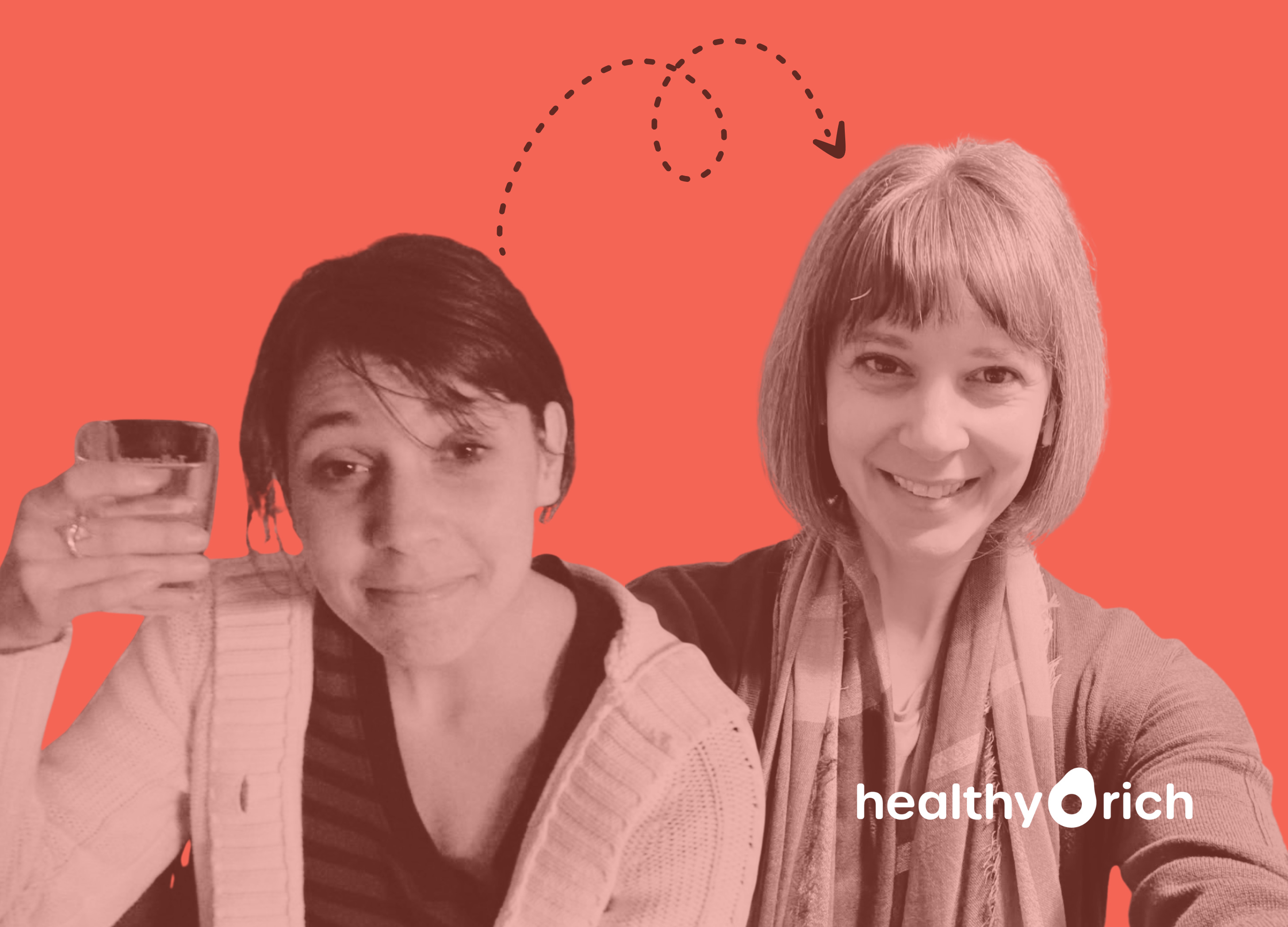
My hair didn’t gray as fast as my mom’s had, though. I spotted a few novel gray strands by my late 20s, but my hair didn’t read as “graying” for years after that. Around age 33, I was headed into a restaurant with friends, who caught a glimpse of my hair highlighted by the Florida sun and complimented me for letting it gray naturally. That was the first time I knew my hair was graying.
(I probably didn’t notice it myself sooner because it was happening near the back of my head, and whatever’s going on back there is frankly none of my business.)
My hair has continued to gray slowly, but it’s still mostly brown — I think? If you asked me to describe my mom, I’d probably still say she has brown hair, which is a weird trick the mind plays on us. My mother-in-law had a full head of gray hair when I met her 16 years ago, and my partner referred to her as blond for years until I finally broke the news to him. I know my gray hairs are not a sneaky thing I spot once in a while in the bathroom mirror, because people my age and older point them out all the time. But would a younger person look at me and see a gray-haired old lady? I’m so curious to ask, but that has to be the uncoolest thing a middle-aged person can possibly do, right?
From the moment my friends noticed my gray streak in that restaurant parking lot, I’ve had to choose over and over again to stick with my commitment not to dye my hair. It hasn’t been extremely difficult so far, but I’ve definitely had to think about it. I’ve had a lot going for me: slowly spreading, well-placed gray highlights in my otherwise flat brown hair. My mom’s voice in my head lamenting 30 years of dye jobs. Remote work that keeps colleagues from seeing me in full detail. Thin privilege that lends me a pass on other judgeable beauty choices. A cool woman I once worked with who was a few years older than me and gray at her temples but who exuded youthful energy and cheerfulness; her demeanor, for me, broke the association between gray hair and being old.
I’ve also grown into adulthood among millennials who are ostensibly fine with gray hair. There was even a period where the youths were dying their hair gray and silver, apparently, and someone briefly declared gray hair very stylish and cool. But I haven’t met many people my age who aren’t covering gray hair. Throughout my 30s, I listened to the chorus of support for gray hair and looked around at nary a gray head in sight, and I assumed my hair must have been aging earlier than everyone else’s. Turns out, gray hair is one of those things we love to support for others but can’t quite participate in ourselves. Like vacation days or public schools.
When another millennial woman compliments my graying hair, I kind of hear her saying, You’re so brave for allowing yourself to be this ugly in public.
Maybe I am. Mostly, I don’t think about it much. I wouldn’t say I love my graying hair, as much as I can’t say I love any part of my body. I’ve been generally happy with it over the years as a charming part of myself — but mostly as an insignificant detail that goes mostly unnoticed.
But now the rest of me is visibly aging, too. I see more and more of my mother and my grandmother in the mirror every day. I have my grandma’s hands and feet and stomach. My lips are losing color. My eyes are always tired. My gray hair seemed charming when it surrounded a cherubic face. But on this old lady? It’s just another thing about me that’s old.
I’m not upset to be aging. It’s a privilege to grow old; we all know that inherently. I knew many people who died in their 20s, and I had a sister who died when she was 39 — I’m very happy to celebrate turning 40. We should welcome the signs of aging that remind us of our good fortune.
I guess I’m upset that it’s so normalized for people to hide their aging. I don’t want to spend my time, money or energy dying my hair or getting botox or lip fillers or any of that stuff I’ve just recently learned is a thing now. I want to feel good in my body as it is naturally, and I don’t want to feel bad about myself for looking my age. But when I see my frumpy self in a Zoom frame next to a bunch of people around my age who have smooth faces, bright lips and gleaming hair, it’s hard not to judge (or feel judged). That’s not to say any of this is your fault if you’re into any of this beauty stuff; you know how I feel about individual responsibility. This is just how it feels to be a middle-aged woman in our culture, and I’m experiencing it for the first time.
I’m also not upset enough by this feeling to start dying my hair. I appreciate the freedom of never having that task on my to-do list.
On a 2024 episode of Office Ladies, Jenna Fischer said this about aging that had me in tears:
“One morning [in my mid-40s], I looked down at my hands and I got immediately emotional because my hands looked just like my mother’s hands. And I thought, one day she’s not going to be here anymore, but she’s always going to be in my hands. I’m going to see her…when I look at my hands.”
Even though she wasn’t able to enjoy the same liberation at my age, I’m so grateful to my mom for teaching me how much freer I could live by eschewing the expectation to defy aging.
One day, she won’t be here anymore, but I’ll be able to see her gray hair and her laugh lines every day in the mirror — and what a privilege.
Your turn
How do you feel about your hair? About wrinkles, laugh lines, cellulite or anything else the “anti-aging” industry wants us to attack? What lessons did you learn about beauty from the older women in your life? What has been your relationship with beauty and aging throughout your life?
🍭 What you’ll get when you upgrade…
In my class, How to Start Freelancing, I walk through the exact steps to set yourself up financially, professionally and emotionally to start freelancing — whether you want a career change or a side gig to make a little extra money. You’ll learn how to add ease and joy to your life by designing the job or career that’s just right for you. Paid subscribers have full access to this and all Healthy Rich classes.
Oh, Jenna's quote! I saved a quote from designer Diane von Furstenberg years ago in my Notes app that your piece inspired me to revisit: "In my older face, I see my life. My face carried all my memories. Why should I erase them?"
Thanks for sharing your perspective on this; I don't read many stories about women intentionally going gray, and I enjoyed the different take.
Personally, I vacillate between wanting to let my hair go gray and wanting to color it. I'm 36 with very dark brown hair and tons of gray hair in the mix. My mom colors her hair every month and my friends all color their hair too. I already look less "put together" than most of my peers because I don't invest the time and money into doing my makeup, accessorizing with jewelry, or wearing what's in fashion. Coloring my hair seems like a way to look put together without a daily commitment, ya know? But having another task and expense is annoying, so I don't do it often. I'm still trying to decide what I'd like to do moving forward.