


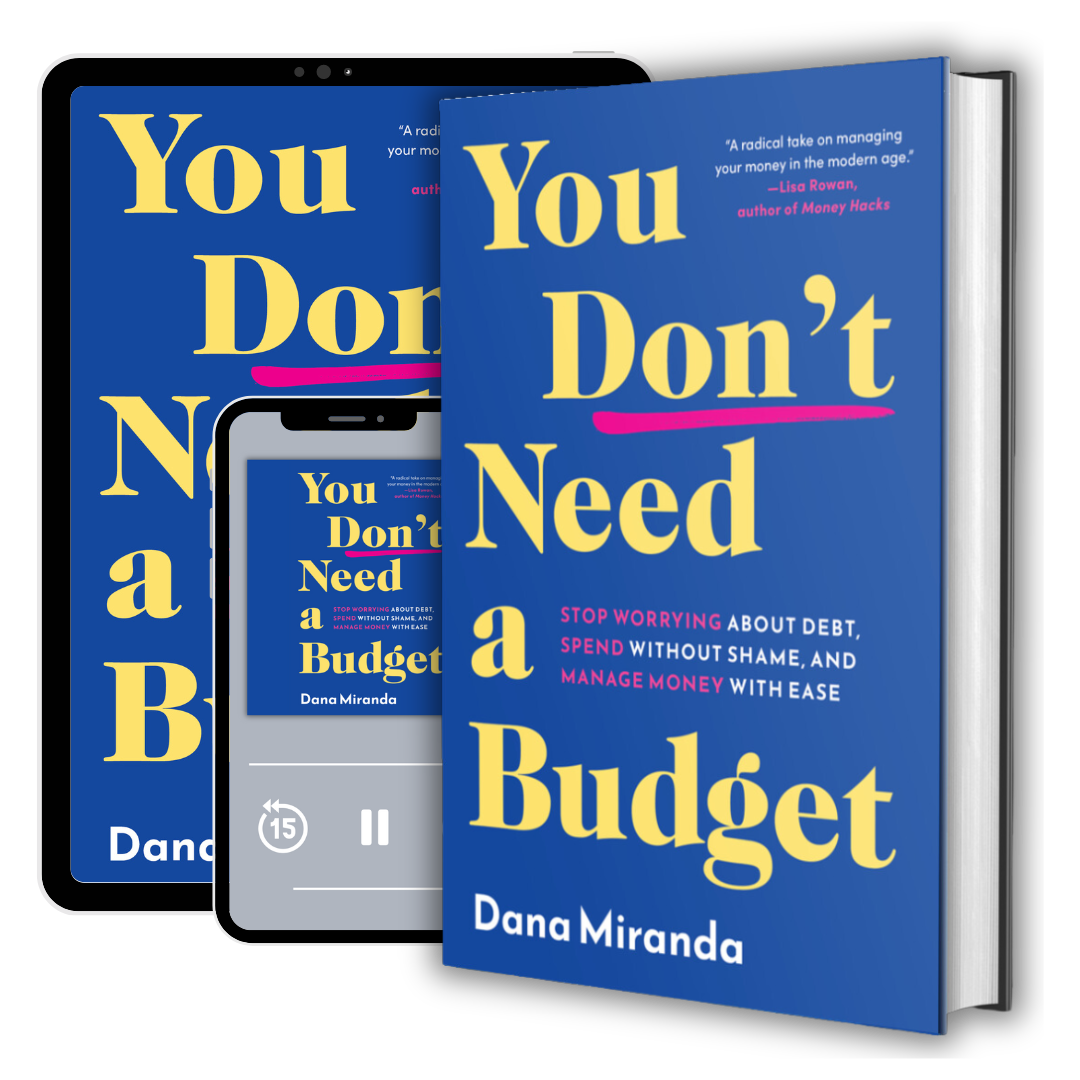
This is the latest guide in my Budget-Free Basics series, actionable ideas from my book You Don’t Need a Budget to help you manage your money without restriction or shame.
Regardless of your financial circumstances, building a store of money is the simplest way to create financial ease and approach life from a place of abundance.
Setting that money aside isn’t the easiest task for everyone. But it’s simple and powerful for those who do it, so let’s talk about how to make it happen (and how to take care of yourself when you can’t).
There’s no such thing as a financial ‘emergency’
Setting aside some money that’s not earmarked for anything and is always there when you need it lets you live life without money calling the shots. That’s what financial independence looks like to me.
I call this store of money a comfort fund. I deliberately use that label instead of the popular term emergency fund to help you make an important shift in your relationship with money.
Building an “emergency fund” implies that a change in your financial circumstances constitutes an emergency in your life. I reject that narrative. The most financial fluctuations can do is make you uncomfortable — they don’t control you. Money is one of many realities in your life; it’s not the defining force.
Calling your store of money a comfort fund is an ongoing reminder of that fact. It’s also a small step to ease your money stress that can make money management challenges feel more severe than they are.
Dropping the word emergency from your financial plan is a way to remind yourself that an unexpected change to your financial circumstances is not only not an emergency — but also not even necessarily a bad thing. Losing or leaving behind what feels like financial security might be a challenge, especially if it happens unexpectedly. But choosing that change could also be the first step to a more joyful life!
A comfort fund, like an emergency fund, can protect you from disaster, but, unlike an emergency fund, it can also help you take advantage of unexpected opportunities.
You deserve the freedom to choose the life that’s right for you, and you have the right to pursue it regardless of your financial circumstances or plans. A comfort fund, if you’re able to build it, is a way to help soften your landing when you take that leap.
Money is meant to be spent
You can use the money in a comfort fund for anything that contributes to your comfort; it’s not only reserved for moments of desperation.
You can use comfort fund money to move across the country or buy a new car. You can use it to transition to self-employment or look for a new job. You can use it to file for divorce, weather a layoff or avoid depriving yourself if your income slows down. A comfort fund ensures that money isn’t the deciding factor in your day-to-day or major life decisions, like where you live, where you work, when you have children or who you’re in a relationship with.
We call this a comfort fund because its purpose is to add comfort — ease, joy and dignity — to your life.
I chose this language to remind you to give yourself permission to use the money for anything that contributes to your comfort. The thread of greed that runs through budget culture encourages a habit of hoarding under the guise of good money management, and it threatens you with a fear of scarcity to discourage spending. That fear can keep you always worried about the next thing that’ll come along. What if you spend funds on something you deem less severe now, and you don’t have them when you might really need it?
Too many people suffer through untenable situations while sitting on a well-endowed “emergency fund” because their needs don’t feel like an emergency. Using the term comfort fund reminds you you’re worthy of the comfort money can buy, no matter your income, how you work or how you spend. And you get to decide what those comforts are; don’t let budget culture set your standards for you.
How much money should be in your comfort fund?
The amount you need in a comfort fund is completely up to you; choose the number that makes you comfortable right now.
The right amount is different for everyone, so I can’t offer a convenient formula. Set a target amount for now that lets you breathe easy and make life decisions without money weighing in. If that’s a big, meaty, FIRE amount, then build toward that number. If a $1,000 cushion helps you breathe easy and live your life, work toward that. And if the number that’s comfortable for you now is $0? Let it be $0. Only you can say what’s comfortable for you in this moment.
At some point, you’ll probably have an opportunity to spend from your comfort fund. Don’t forget that’s what it’s for! Deciding to use your comfort fund in a moment when you might not be able to immediately replenishing it might mean adjusting your barometer for comfort to accommodate what you need at the time. This fund can afford you comfort when you need it, but only if you allow yourself to use it and trust in your ability to continue to feed it.
Listening to your intuition and being in flux with the seasons of your life might make it seem like you don’t have to think about the amount in your comfort fund. The number you set isn’t important — but it’s important that you set a target amount, so you can avoid the too-common trap of oversaving and hoarding money without a purpose.
Set a target amount for your comfort fund, and stop feeding it once you hit the target. Redirect your resources to other goals, spending or giving until you use the funds and need to replenish them.
To find your number, you could tie your comfort fund target to your income or expenses, as many experts recommend for an emergency fund, but be careful not to get caught up in the idea that you can only touch this fund if you lose your income.
You could instead tie it to a goal that’ll be easier with a financial cushion, like working for yourself, moving to a new town or adopting a child. Or you could base it on past experiences of life changes or major decisions.
You can simply commit to contributing an amount that feels feasible for you each month for a set number of months. Or you can set a goal based on what your gut tells you is a comfortable number for where you are in life right now.
Continue to listen to your gut and adjust that amount as your circumstances change.
How to build your comfort fund
When you have resources to direct to savings, building a comfort fund is as simple as setting the money aside in an easy-to-access checking or savings account.
Step 1: Use your money map to set a comfort fund target, achievable contribution plan and desired timeline. Adjust those as needed.
Step 2: Set aside savings when you’re able. You could do that by:
Automatically directing a portion of your income into a comfort fund savings account.
Setting aside mini windfalls, like holiday gifts and tax refunds.
Maintaining your commitments after your next raise and directing the surplus into savings.
Working a side gig temporarily to bank the target amount faster.
Deprioritizing commitments or debt-payoff goals to redirect money toward your comfort fund.
Your comfort fund is a living creature. Use the financial cushion when you need it, and continue to contribute to the fund to maintain your target amount as you go. Adjust according to changes in your life; you don’t have to contribute the same amount every month, and some months you might not contribute anything at all.
Keep your comfort fund goal and progress up to date on your money map so this is always part of your financial plan and you can easily rebuild after dipping into the funds.
Taking care of yourself in the meantime
Here’s where we address what typical financial advice somehow, annoyingly, fails to mention: You might already experience the kinds of challenges or opportunities comfort funds are meant to address. So what if you don’t already have a comfort fund stashed way?
That’s a tricky situation to be in.
Sure, you might be able to save $1,000 or $10,000 by the end of the year — but what if you need extra funds in the meantime? How are you supposed to build a comfort fund while dealing with financial triage? And how do you deal with financial needs before the comfort fund is there to back you up?
You have a lot of options, but what’s best for you depends on your circumstances.
First and foremost: Don’t let money be the thing that keeps you in a dangerous or intolerable situation. Lean on every community and debt resource you can find to get out, and balance your financial plan later.
Letting your finances fall into chaos in order to remove yourself from an unsafe situation or an uncertain future is not irresponsible by any measure. Take care of yourself first, and worry about the money later. Leaving a financial disaster in your wake as you escape a situation that does you direct harm makes sense. If money is the thing holding you back from making that move, that’s budget culture overriding your gut instinct. Quiet the noise, and listen to your intuition to find your next move.
If your situation is annoying, vexing or unsustainable, but not dangerous or urgent, you have a little more leeway to make adjustments without a financial typhoon you have to address later. Don’t let the tolerable nature of a bad situation lull you into doing nothing to change it, but determine what you can handle temporarily while you make strides in other areas. For example, can you handle an unpleasant job in the short term if you pull back and perform at the bare minimum? Could you live with nitpicking parents rent-free if you chip in a few chores you wouldn’t otherwise care about?
Again, listen to your intuition. You know the difference between an annoying situation and an intolerable one.
A job where a boss harasses you on the regular and has faced no consequences is intolerable. Claim unemployment benefits, use credit cards, cut your rent commitment and move in with a friend, so you can leave the situation immediately. A job where a boss is disorganized and egotistical and won’t listen to feedback is unsustainable, but you might live with it in the short term so you can direct money into a comfort fund and search for other options.
Once you set yourself up to weather a bad situation in the short term, you can turn your energy reserves to making a plan to leave it in the longer term. Some steps that might help you move into a better situation faster:
Research any available community and government resources (like unemployment benefits and health insurance subsidies) so you’re prepared to use them as soon as you need them.
Bolster your options for debt resources. For example, you might open a new credit card while you have a stable income and are paying bills on time, in case you don’t have access to that additional credit after deprioritizing debt payoff to transition from one income to another.
Eliminate or pause commitments to reduce the amount of resources you need to get by month to month.
These are generally short-term fixes and aren’t sustainable if you have long-term financial goals, especially any that require a high credit rating. But they are options to remove financial barriers that might be holding you back from making the kinds of changes your life needs. A well-tended comfort fund is the long-term fix that can stop money from dictating your options.
⭐️ Transform the way you approach money!
My Budget-Free Fundamentals series gives you everything you need to gain a fresh perspective on your relationship with money. In a few short lessons, you’ll gain tools to use money the way you want without relying on restriction, succumbing to shame or following advice rooted in greed. Paid subscribers have full access to this and all Healthy Rich classes.
Calling it a comfort fund instead of an emergency fund is such a nervous system reset. Best financial reframe I’ve heard.
I like this reframing. I recently started calling my liquid fund Cash Reserves. I realized exactly what you share here. I don’t have financial emergencies and I’m not eager to plan for them. I do enjoy having a stash.