


I’m doing this project to understand who I am at 40 — so why start with a reflection of who I was as a tween?
Because, I suspect, that’s when I was the truest version of myself.
Just as I started laying the tracks for this experiment in self-discovery, I found this poignant post by Erica Barry at Side Quest, where she shares the most perfectly astute insight for this moment in my life:
“Growing up is becoming who you were at 12, except this time you like her.”
I’ve spent my entire adult life simultaneously resisting and trying to return to the person I was before my sex drive, self-consciousness, social-awareness and need to make a living kicked in and scrambled my wires. When you’re living through that age, every innocent and natural thing about you seems awkward and wrong, and you can’t wait to grow up and become something better.
Then one day you find yourself grown and wonder how you ever let yourself stray so far.
As Barry explains, those pre-teen years perfectly represent the core of who you are:
“[At 12,] I wasn’t sure what I wanted, but I knew who I was…I was about to learn how many calories were in a Chocolate Chip Chewy Bar, what 32B meant and all the cruel arithmetic of womanhood.
But for that brief window, I didn’t know any of it. The world was still strange, shimmering, and enchanted…
Since then, I have probably committed a thousand tiny betrayals against myself in the name of being ‘grown.’”
Barry shares a list of questions in her post to guide a reconnection with your tween self, which I’ll use to remember my core self as I set out to discover who I’ve become in the meantime.
Let this also act an introduction, in case we haven’t met before :)
To set the scene, I was 12 years old in 1998. Friends was the top-rated sitcom, Titanic was smashing at the box office, Shania Twain’s “You’re Still the One” was everyone’s wedding song, and Savage Garden’s “Truly Madly Deeply” was breaking hearts at middle school dances. My family had one giant Compaq computer and no internet; no one I knew had a cell phone. I’d lived in my rural Wisconsin hometown my entire life and attended the same school district with the same 100-ish classmates since kindergarten.
What did you believe about the world before you learned to manage your expectations?
I believed success would always feel like you were flying. I cried at the moments in movies when the underdog would win unexpectedly, and an entire town would rush the field, hugging, crying, screaming and hoisting the protagonist on their shoulders. It was otherworldly; the camera would zoom out, the noise would give way to the movie’s theme song and everyone would start moving in slow motion, floating in a space of pure connection and joy.
(In real life, I don’t switch into slow motion when I experience success; it’s fleeting. I don’t savor the wins, because they’re so expected by the time they finally arrive, and I immediately raise the bar and look ahead to the next thing I haven’t yet accomplished.)
What did you love before you felt embarrassed?
I was a sucker for love! I was obsessed with the Ross-and-Rachel and Chandler-and-Monica storylines on Friends. I still loved the Disney movies of the 20th century, where an ethereal and clever princess always found her Prince Charming in spite of the barriers from her family or society or the fact that she was half fish. In addition to seeing Titanic in the theater three times and wearing out my family’s VHS, I was turning to rom coms, whose heyday was just getting started. I was constantly falling in love with a new crush and desperately documenting every sideways glance and brief hallway “hello” in my journal.
At 12, I also still loved soft things and make-believe. I held onto my favorite stuffed animals. Baby dolls and dress-up clothes came out when no one was around. I still had all of my Barbies and loved to imagine a life for them and set them up in poses like they were doing a promo shoot for the movie they starred in inside my head.
I wanted to be a ballerina. I had a book of beginner ballet poses I practiced at home and got slippers, tights, a leotard and a skirt for my birthday, but my family couldn’t afford dance lessons, and my mom thought 12 was too old to get started, anyway. I liked to wear jeans and a sweater over the leotard and tights — like Jessi Ramsey in The Baby-Sitters Club — and imagine I was just coming home from a class.
What did you dislike before you talked yourself into liking it?
I hated horror films and swore them off after seeing the first Scream movie and not sleeping for two weeks. I talked myself into watching them with friends in high school to avoid seeming babyish, but I mostly shielded my eyes if no one was looking.
I never liked spicy foods but trained myself to tolerate heat in my 20s. As I’ve gotten older, that tolerance has waned, and I’ve had to overcome a sense of weakness because of it. But it’s actually fine to not want to sweat while I eat noodles, right?
I was never a cynical person, but I came to value cynicism as I got older and saw cynics as people who knew something the rest of us didn’t. I’m actually quite optimistic and expect the best from people, but I’ve learned to dig deep for negativity to avoid appearing naive.
What could you lose entire afternoons to without anyone asking you to?
Reading! In seventh grade, I was still devouring The Baby-Sitters Club, even though my “reading level” and my mom both said they were too easy for me. But it was such a comfort to dive into that world, which I’d been in since I started reading the Baby-Sitters Little Sister spin-off chapter-book series in second grade.
That same year, I also went through a phase of Lois Duncan and other thrillers — which I loved as books but hated as movies. And I read The Diary of Anne Frank, went down a rabbit hole of novels set in the Holocaust, and learned that writing is vital not only for preserving the story of a profound time but also for surviving it.
I remember this era of reading more than any other in my life, because I probably read more than at any other time. Our middle school had just adopted the Accelerated Reader program, so I could get class credit for reading books of my choice, and at my pace. (As avid a reader as I was, I rarely made it through teacher-assigned novels in my entire K-12 career.)
Besides reading, my 12-year-old self could get lost in Prime Time TV every evening, and I was starting to stay up late watching reruns from the 60s and 70s on Nick at Night.
I also used to draw a lot. Through class. Idly in my room at home. I was never the best artist among my peers; that accolade went to this girl who I think was my fourth cousin or something, who drew cute cartoony characters with big, bashful eyes. My drawings were closer to realism, and I drew things like the Spice Girls with the addition of myself as “Mini Spice.”
What small comforts did you surround yourself with?
In 1998, I was listening to Hanson’s and Nsync’s debut albums on repeat. (I still listen to Hanson’s 1997 Christmas album, Snowed In, every holiday season.) There was a bit of Spice Girls in the mix. The next year, I’d replace it all with Britney Spears’s …Baby One More Time. For years, I also listened to a Madonna greatest-hits album called The Immaculate Collection that we got for a penny through a Columbia House promotion.
(I no longer love that old pop music or a lot of new pop music, but I still find comfort in listening to the same music over and over. For several years, my stim listens have been Butch Walker and the Hamilton soundtrack.)
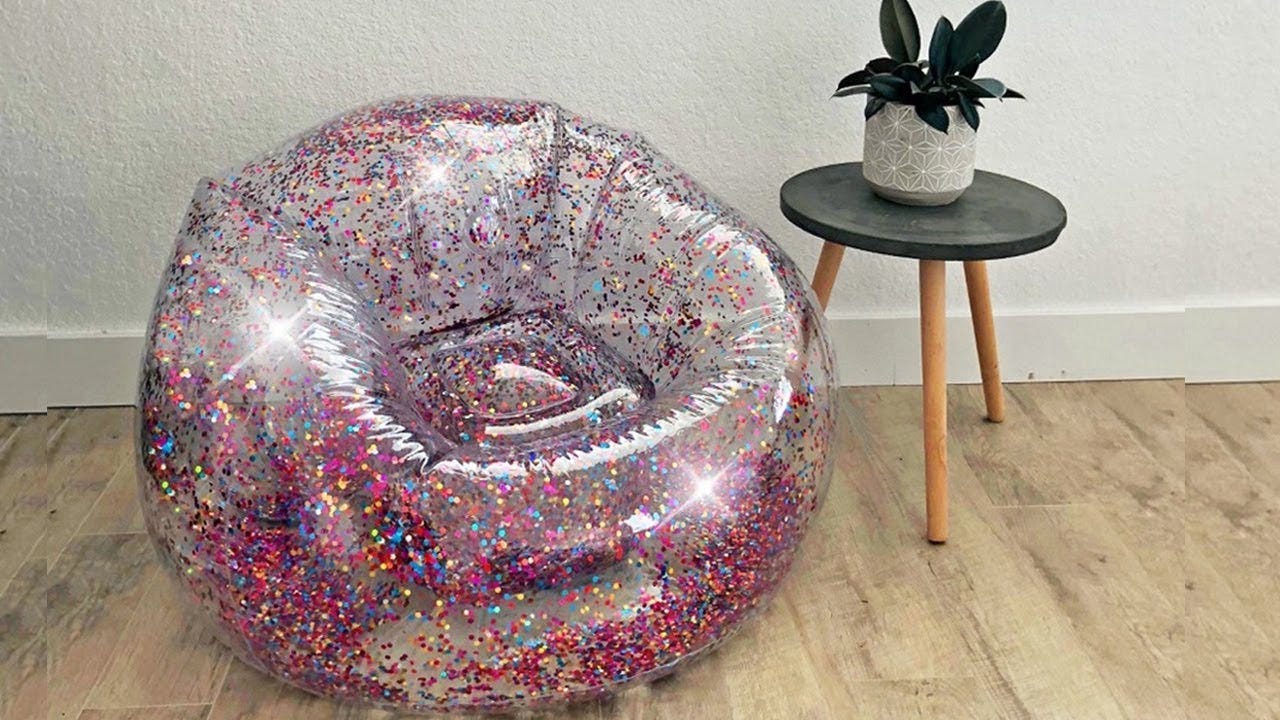
My happy place was my room, because I had it to myself and was allowed to decorate it more or less the way I wanted. The walls were painted lavender, because I had to pick a favorite color for some reason and I’d picked purple. My bed was covered in the first quilt my mom ever made. (She’s become an avid quilter since and hates to spot the errors in this one, which I still have and love because of its imperfections.) I had a desk, where I’d sit and write in my journal while I told my parents I was doing homework. I had a CD tower with about 60 CDs, even though I only listened to those few. I had a lava lamp with purple “lava” that soothed me on (frequent) sleepless nights. And the piece de resistance: A translucent, purple, inflatable plastic chair filled with foam beads. It was too short, squeaky and incredibly uncomfortable — but so cool.
Who were you when you weren’t trying to be strategic?
I was an absolute dork! I played with Barbies. I twirled in pink skirts. I cried at rom coms. I crooned loved songs. I wrote stories in my head. I spilled my guts in my journal. I walked to school with my nose in a book.
I was a hopeless romantic with my head in the clouds. I read Ann M. Martin’s autobiography and wanted to be a writer. I watched You’ve Got Mail and wanted to own a bookstore. More than anything, I wanted to fall in love — and be fallen in love with!
And most importantly: What would change if you let her back in?
If I were more of my 12-year-old self today, I’d be lighter. She had plenty of baggage — unnamed anxiety and depression, insomnia, that feeling of not being fallen in love with — but she was so hopeful and silly.
When I attempt to construct my ideal environment now, it has a lot of the character of my 12-year-old bedroom. It’s more pink than purple, but there’s a lot of softness, a couple of dolls, fun art on the walls.
Letting her back in would mean being more playful and slightly less self-conscious. Less encumbered by expectations and obligations. Optimistic again. Less reflexively cynical. I’d see the best in people and believe I could achieve my dreams (I might even let myself dream again…).
I’d sing more and dance more and play my flute, and I’d believe I was pretty good.
I’d write for no one but myself.
I’d draw again.
I’d tell friends my wild-hare ideas because I’d think they’re brilliant and have to be shared.
I’d play make-believe and wear costumes.
I’d read books that didn’t make me look smart.
I’d add a lava lamp and an inflatable chair to my office.
I would do all of this again if I were to become my 12-year-old self — except this time, I’d love myself for it.
Thank you so much to Erica Barry for the inspiration for this post! This reflection was invaluable and a perfect way to kick off an exploration of where I’ve been and where I’m going next as I turn 40.
Your turn
Who were you at 12 years old? What would change if you let them back in — even some parts, even just a little?