


This essay about my relationship with work and money is part of my project Hi, I’m 40, where I’m spending a year writing 40 essays about who I am as I turn 40. I’m publishing them on Healthy Rich as a step toward expanding the purpose of this newsletter: seeking comfort and peace in work, life and money.
If you don’t want to be notified about essays in this project, you can unsubscribe from just this section by unchecking “Hi, I’m 40” under notifications in your account settings.
I’ve been in my new job about three months as you read this. Taking this job after a destabilizing layoff has had me thinking a lot about what I value in work right now — how life has shaped those values, how I feel about my choices and what work means for me personally, professionally and financially in this moment.
In short: It’s really f*cking complicated.
I’m a millennial who was too poor and too aimless in my 20s to notice the impact the last time our economy and job market felt like it does now. I didn’t absorb my generation’s hustle mentality to protect against these market forces; I only took in half of the message, the part about forging your own path and doing work you’re passionate about.
For nearly two decades, doing something I love has been my north star for work.
I idolized bloggers who were building online businesses, publishing books and forging viable paths doing work they loved. I missed the part where Recession-era corporate layoffs were the catalyst for almost every one of those journeys.
Now I’ve intentionally and enthusiastically taken a job in corporate marketing, the most selling out of all selling out a writer can do. And I’m not sad about it.
I have this job because I reached out to an old colleague after I was laid off. He was still with the startup where I’d started my career in 2015, except it’d been acquired by a multi-national marketing conglomerate during my absence. I knew the company I had loved then no longer existed, but I was excited for an opportunity to work with some old pals and to tread on familiar ground again.
I asked about writing or editing work, and he surprised me by pitching a new position they were designing in content strategy, one he thought I’d be uniquely qualified to take on even though it involved a lot of data analysis I had no experience with. That challenge and that faith in me were exciting, so I took it on.
I’m certainly not doing the creative writing work I thought I’d earn my way into by my 40s, and I’m not even doing service journalism in personal finance anymore. I work in content marketing for personal finance companies — a reality I was desperate to avoid when I started in this industry.
But more than 10 years later, I’m happy to accept this fate — and I’m actually quite proud that I’ve earned this position.
So how do I quiet the little nag in my brain that says I should be ashamed of how I make money?
How I gave up on everything that used to matter to me
I took my last job because I was in the midst of burnout, freelance work in my industry had dried up and the promise Substack had made to small creators was quickly fading. A former client reached out with a surprise job offer, and I jumped at the promise of a stable paycheck and a company to pay for my health insurance. They made me end my freelance work because of perceived conflicts of interest, and I eased up on newsletter work to avoid perpetuating my burnout. After six months, they laid me off.
Left to start from scratch, eat away savings and build up debt, I couldn’t imagine launching into the hustle again. I’d been singing for my dinner as a freelancer for six years, three with a newsletter piled on and two with a book project piled on top of that. I’d taken a full-time job to consolidate my responsibilities and ease the burden of constantly wondering where my income would come from. I’d just caught my breath for the first time in years when they pulled the rug out from under me.
That was the second time I’d been laid off from a job I’d been recruited into only months before, and it was the third time I witnessed layoffs at a company. (Being spared isn’t as devastating, but it still leaves a scar.) Also fun: A year earlier, I’d made it through weeks of interviews at one job and got on a call to receive my official job offer, only to find out the company had been acquired that day and they were on a hiring freeze. With headlines proclaiming historic job market volatility and record layoffs, I don’t think I’ll ever feel safe in a job again.
I couldn’t imagine scrounging for freelance work, and I couldn’t imagine the indignity of performing through more interviews. But I’m the breadwinner in my house, and I could only dip into my savings so far before hitting a complete panic. I had to find work somehow, and I wanted to wade through the least bullshit possible to do it.
That’s how I got to the job I have now.
To be clear: It doesn’t feel like a last resort or a compromise or a disappointment! It offers challenging work I enjoy with people I quite like for pay I think is fair. But it doesn’t spark what my 20-something self would call “passion”; it’s clear 20 years of struggling in this economic system has whittled my brain into a point that makes me grateful for a job I would have scoffed at when I had the privilege of imagining the life I wanted to live.
I’m not here to say that’s reality and we have to suck it up. It absolutely sucks that this is what work in the American economy does to people. A nation of our wealth where middle age is inevitably filled with regret and despondence is ridiculous. I’m just here to say: This is how I’m getting by these days.
What I value in work right now
The most honest thing I can say is that, right now, I work for the paycheck. The most important thing a job can offer me is a direct deposit that doesn’t stop coming until I’m ready to leave. And I really mean that. The only reason I didn’t apply for jobs at Starbucks or McDonald’s is that they don’t pay enough; I’m no longer deterred by unfulfilling work or detestable corporate brand names.
But let’s not be so bleak.
I also revisited my criteria for good work, and the job I have now checks all the boxes in unexpected ways. Of all the jobs I half-heartedly applied for after my layoff, this is the only one that comes close.
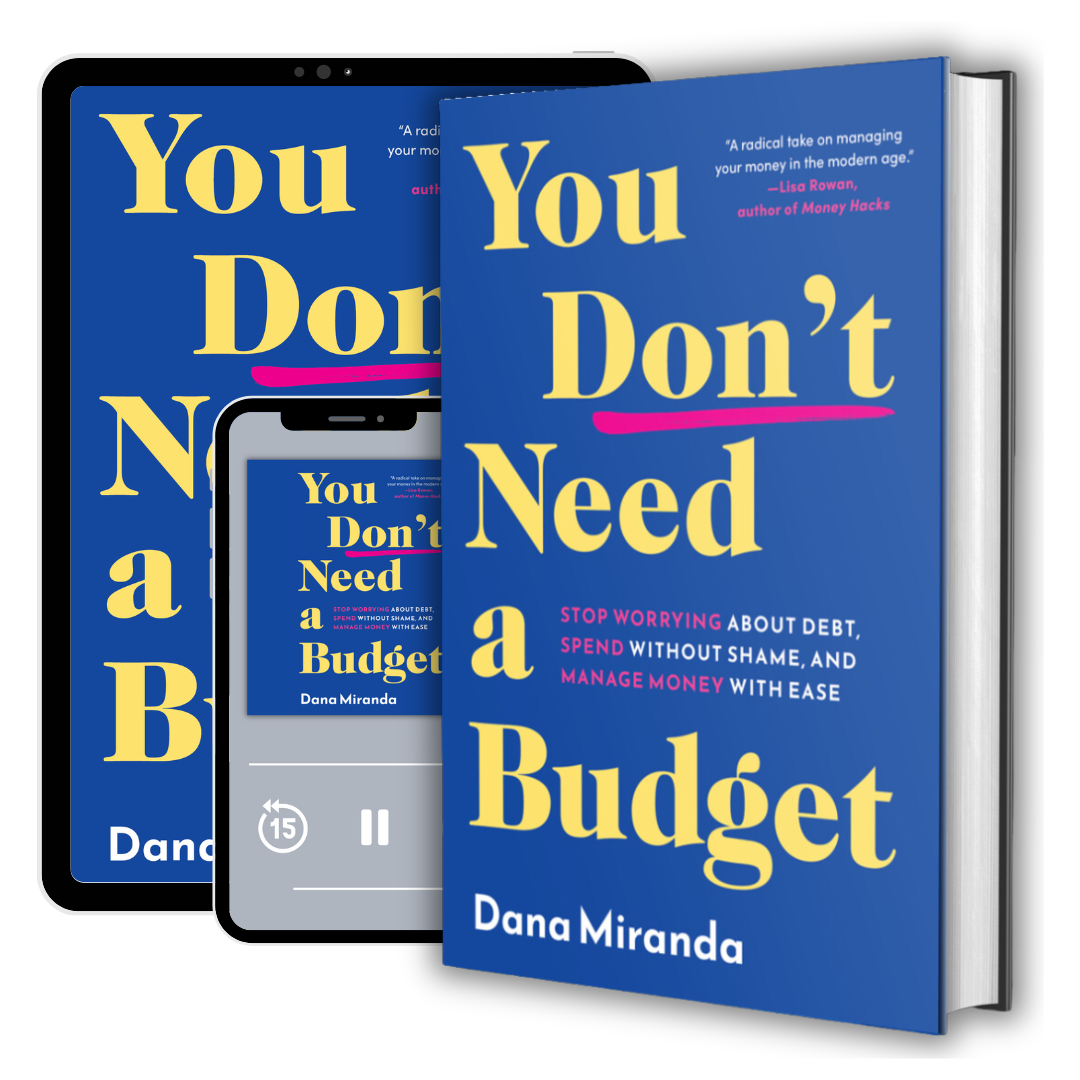
I’m certain you’ve consumed my book, You Don’t Need a Budget, cover-to-cover multiple times, but just in case — here’s how I define good work along three dimensions of financial wellness:
Head: It serves financial goals with a solid salary and opportunities for advancement.
Health: It operates in your best interest through quality-of-life features like health insurance, inclusivity and work-life balance.
Heart: It’s aligned with your values, where you want to make an impact and how you want to care for people.
My job pays me a great salary — the highest I’ve ever earned and, notably, the amount I asked for. It offers health insurance (by mandate, a protection I don’t have as a freelancer), a better-than-average 401(k) match, fully remote work with actually optional offices in two states, and they haven’t shied away from DEI initiatives in the wake of Trump 2.0. Plus, they haven’t had layoffs there in more than two years, so, you know, yay.
Does this job serve my heart?
20-something me would laugh out loud at that question. She 100% would have called me a corporate sellout and berated me for saddling myself with a mortgage and an iPhone. Then she’d roll over and sleep soundly on the futon she found on the side of the street.
40-year-old me needs a memory-foam mattress and an annual mammogram. I’m no longer willing or able to make the financial sacrifices I made in my 20s, so I can’t hold work to my 20-year-old standards anymore.
But, beyond the money, the job serves my heart in ways I wouldn’t have thought to look for in my 20s.
First, the people I work with value my contribution. The person who hired me was eager to get me in the door. They see my ragged work history and my forays into self-employment and authorship, and they love me for all of it. Having just dipped my toe into the job market these past couple of years, I know it’s exceedingly rare to be valued for the person you actually are.
Second, I have the opportunity to bring joy to people I work with. I might not be a nurse at a nonprofit clinic in an impoverished immigrant neighborhood; the work I produce isn’t providing even a necessary public service or entertainment. But there are real people in front of me every day who show up because their paycheck keeps their families alive, and I can put my energy toward giving them a good day.
I’ve been frequently revisiting my favorite takeaway from Bree Groff’s book Today Was Fun:
“All I want is to spend my days with funny, creative, inspiring people who are lovely to hang around. And while we’re hanging out, a fun thing to do is create value for others and money for ourselves.”
Reading Groff’s book broke open the meaning of good work for me. She doesn’t wax poetic about finding meaning and passion in your work; she just says wherever you go for a paycheck should and can be fun most days.
There’s some capitalist nihilism in this concession. I’d really rather tell you being laid off set me free from the hamster wheel of corporate America and let me finally chase my creative dreams. But that story was never true for the people who told it to us in the 2010s. Many of those bloggers I adored quietly went back to work after 2020. Anyone still in business for themselves depends on corporate America for contracts or sponsorship, or worse, on private equity for investment. Everyone is staring down the barrel of AI.
The high hopes of my 20s have been dashed. But instead of letting that turn me into the hopeless middle-aged crank I hated encountering back then, I can adjust my barometer and find happiness where it’s available to me.
What I’ll take from (and give to) this job
I appreciate the security of the paycheck from this job. But I’ve done work for money for the past six years, and that alone leaves me hollow. I can find more in this job, like I did the first time I worked for the company. I found a new version of myself in that era, and it has defined everything I’ve done over the past decade — the work I’ve pursued, the things I’ve created, the living I’ve been able to maintain, the ideas I’ve contributed to the ether. It strengthened me in a way I’ll never lose.
After leaving for new horizons six years ago, why does it make sense to go back now?
I returned to this (new version of the) company, because it felt like the right time for me and for them. New leadership had taken over shortly before I was hired, and they explicitly value quality in media, not just marketing dollars. The team I joined is eager to reinforce the foundation of the brand I helped build a decade ago — a quality I staunchly defended early in my career. This makes an environment that feels like the right place for me to develop and grow in creative and strategic thinking, not just another corporate job to collect a paycheck and use half of my brain.
It’s the right time for me, because I’m ready to work for a company again, and I want to do meaningful work for good pay.
Working for a startup in a booming niche, I saw the interesting and creative work that can be done with the resources of a multi-million-dollar company. It’s frustrating to try to build in the scrappy way I’ve done over the past six years. I can continue to do “meaningful work” through my book and this newsletter, and I’m proud of what I create here. But working solo only lets me scratch the surface of what can be done with content.
Plus, earning very little money makes me vulnerable and unfocused in my work. Working inside a company with a good paycheck gives the stability I need to do satisfying work I’m proud of.
And, one of the most important things I’ve been missing: It lets me work with a team toward a shared goal. I love the freedom to create what I want, when I want, through my own projects, and I appreciate messages from readers about how this work impacts real lives. But I’m always strongest when I have a team to bolster me; I thrive under accountability, feedback, idea sharing and cooperative problem-solving. I once thought I might eventually build out a company with a team of my own to create that environment on my own terms — but my dalliances in business building have let me know that’s not the right path for me.
Instead, I can apply my entrepreneurial spirit to spinning up projects and building processes that make days easier and more enjoyable for my coworkers. It’s satisfying that I can suggest a shift that’ll make it easier for them to work and help the company earn an additional $2,000 a day, securing our jobs for the foreseeable future.
In my creative work, I can set up creative systems all day (and I do! And I love it!), but I can’t give jobs to dozens of people fighting for their lives just like I was a few months ago.
Again — I don’t find this state of things acceptable. I’d prefer to put all of my skills into building a cooperative that helps raise money to elect socialists who enact public benefits and dismantle corporate power. In fact, I tried that. It didn’t keep my family fed.
So I’m going with the corporate sellout option.
Finding a new balance
In this latest chapter, I’m finding a new balance. I previously oscillated between starving artist and corporate shill, and I’ve been spending the past several years trying to find who I am along that spectrum. It’s certainly not 100% of either.
Now, I feel comfortable throwing myself into this job without losing myself in service of the corporation. I can distinguish between doing good by my coworkers and blind obedience to company goals. I can be grateful for the support the company offers without believing they care about me. I can get comfortable with my paycheck while holding onto my nest egg and freelance contacts for the day someone moves my name to the wrong column in a spreadsheet.
It’s not unlikely that I’ll tire of corporate work another five years down the road, maybe under a more favorable economy, and swing back toward something creative and independent. But for now, I’m glad I’m good at this work, and I’m going to stop being mad at myself for enjoying it.
Your turn
What’s your relationship with work right now? What did you imagine it would be when you started working? How has your experience over the years changed your approach to work or what you value in work?
This post contains affiliate links for Bookshop.org, so if you buy a book mentioned here, you support the author, local bookstores and Healthy Rich!
I would really like to go back in time and yell at the cultural forces that made me and many others think that you had to LOOOOVE your job.
“The high hopes of my 20s have been dashed. But instead of letting that turn me into the hopeless middle-aged crank I hated encountering back then, I can adjust my barometer and find happiness where it’s available to me.”
This couldn’t have come at a better time for me. I recently decided to leave yet another creative gig where the company I felt valued in drastically changed within 5 years. I accepted a much better paying hybrid position with an established company that has already shown more appreciation than I’ve had in years, and I haven’t even started yet. 😂
I’ve really been struggling with the death of my “successful creative” dreams and how my career has felt more like jumping from one disappearing rock in a river of hot lava to another. I’ve survived the death of so many print industries: catalog, magazine, newspaper, etc., and been forced to find job satisfaction in social media, a toxic stream of mostly meaningless propaganda I actively avoid in my private life.
Thank you for the perspective I needed exactly when I needed it! Your book and Substack have really helped me navigate this period of late-career woes in a way nothing else does! I’m so grateful for your brave honesty and willingness to be vulnerable online. 🩷